
Currently the culture of Zambia is a combination of norms, values, material and spiritual traditions of over 70 ethnically diverse people. Various Zambian tribes moved into the country an few centuries ago in through migration. They number kept on increasing and many of these people moved into in search of farm land, pastures and with an aim of establishing new kingdoms.
The Zambia we see today was home to a number of Free states before colonial rule. And each of these was economically linked to the other and he world outside along the different trade routed to the western and eastern coast of Africa. That time the major exports were ivory, slaves and copper in exchange for salt, hardware and jewellery. In the colonial rule days, the process of urbanization and industrialization made ethnically different people come together due to the economic interests each had. With this a new culture was born without an effort.
On the other hand, most rural communities have been able to retained their traditional and indigenous values and customs. In 1964 after Zambia had gotten its independence, the government recognized the importance of culture in the development of a nation’s identity. Government went ahead to form institutions to promote and protect the country’s culture including cultural villages, private museums which you can visit while on a safari Zambia also the National Heritage Conservation Commission was created.
Zambia’s Customs
It is mainly in the rural areas of the country where most tribes still practice customs as the youth in the urban centers have adapted the Western culture and behaviour.
Before a conversation is started people usually exchange a greeting. If you are approached by a person you should be the first to offer a greeting. Until a woman offers her hand for a greeting, a man should hold back his. Visitors are usually given gifts as a sign/way of gratitude or honour or friendship. If you are offered a gift, you should not refuse it, accept it and receive it with both hands as you express your thanks.

In most tribes, concerning marriage, “Lobola” local name to mean bride price is still practiced widely and this is as a sign of gratitude/appreciation to the girl’s parents. Among different tribes the girl (bride) is taken to her man’s village in the on the eve of the wedding. On the wedding day almost everyone in the village attends with lots of dancing, singing and dancing, this is done for over 2 to 3 days. Lots of food and locally brewed beer are prepared and served after which the elders counsel the groom and his bride. The bride is not allowed to cook until her in-laws introduce her to the fire and pots to use.
In Zambia especially in the villages, funeral is a big occasion whereby all people come together to show grief, mourning and also help as they share expenses. The men are separate from the women during mourning since the women sit inside the house of the deceased and the men are outside. There are also long speeches about the deceased and they thank those that have donated, later every one walks to the place of burial to pay the last respects.
Music and Dance
A number of traditional instruments are still played throughout Zambia but still the yearning for the Western instruments is also increasing. The most common instrument is he drum which is usually used during ceremonies, rituals, community communication and celebrations. Others are the wooden xylophone and a piano.
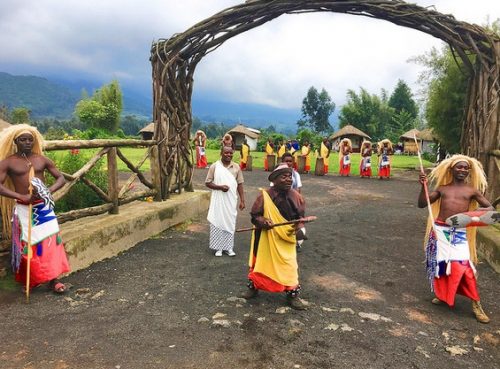
Among all Africans, dance is an important musical way of expressing several ideas such as how times were over the centuries, the times of confidence and tension, peace and turmoil, defeat and conquest, advance and retreat. The dances are usually exciting that most visitors are allowed to take part and have an unforgettable experience of their lives.
Zambia’s current generation has interests in music from the west, from other African countries and also those from Zambia. Basically in nightclubs and big towns the sounds of rumba, kwela and a number of local bands play to the westernized youth.

Arts and Crafts
Most diverse cultures in Zambia have diverse traditional skills. Crafts are found in abundance among Zambians hence they have one of the best basketry in Africa. Craftwork is seasonal since it’s done to supplement other incomes of most families but to most people it’s their only means of earning.
There are a number of locally made baskets and pots although this is being replaced by the manufacturing of tin and plastics. But fortunately, a number of organizations like Nayuma Museum in Mogu, Zintu Handicrafts in Lusaka, Moto Moto Museum in Mbala and Tonga Museum found in Choma are still with an aim of stimulating the production of quality craftwork in both traditional forms and also expressed contemporarily as art.
Both men and women practice basketry all over the country but carving, produce of canoes, woodwork, furniture making of walking sticks, food bowls, and utensils among other things is mainly done by men.
Spend a night in a local village
As most people visit Zambia to view wildlife in the bush, you could do that at spare some time to visit any local community to simply see how people live and understand more about their culture. It is truly an outstanding experience where you can engage in the everyday working of people like; preparing food, hunting. A night spent in locally but mud house is unforgettable; it is safe and the huts are clean each with a mattress and a mosquito net.
The meals are hefty as you will be introduced to “nshima” which is maize porridge that is if you have visited the Kawaza people. You can also visit a school to see how children learn.

Generally, Zambia is a great place with authentic culture!

No Comments